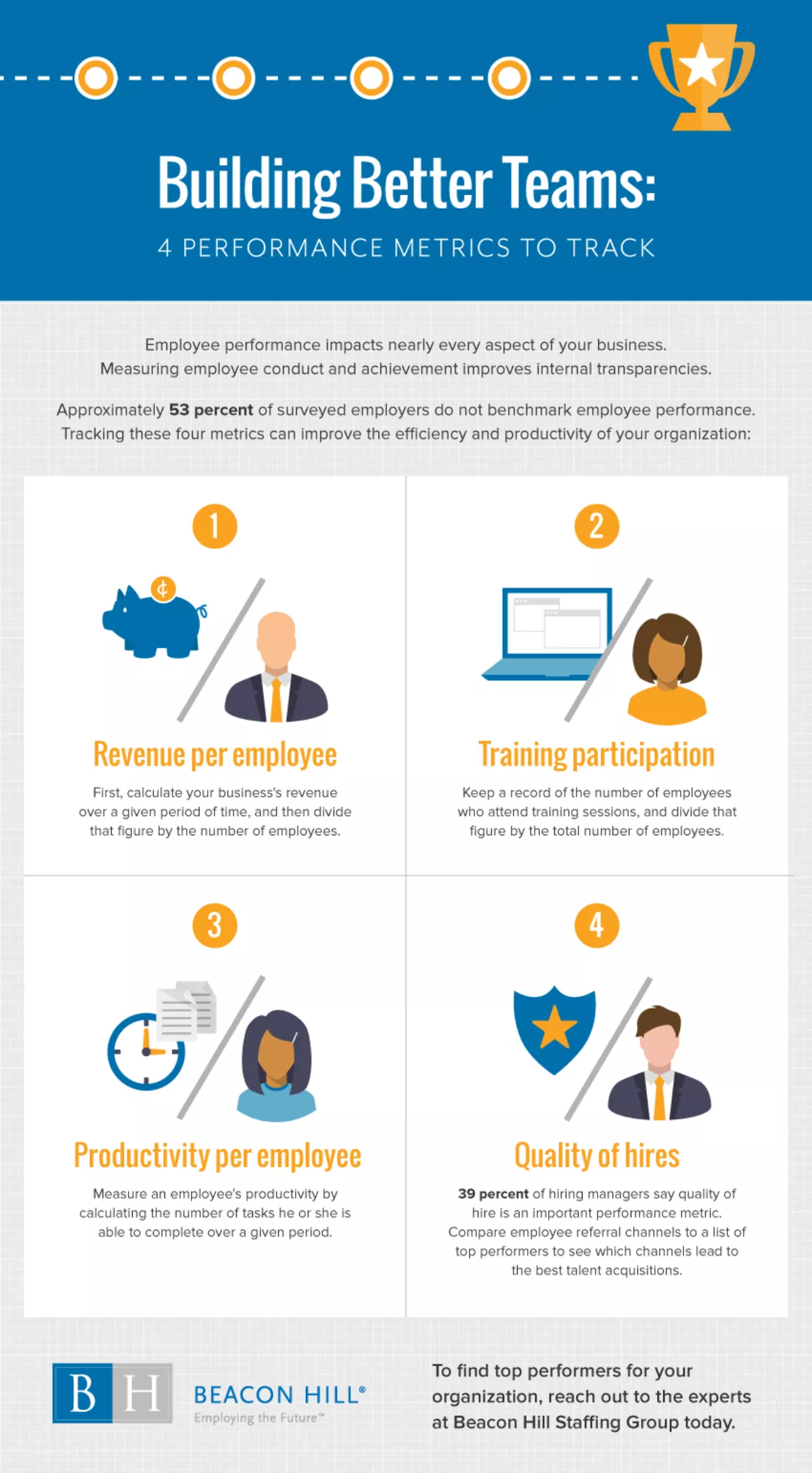
Building Better Teams: 4 Performance Metrics to Track
 Back to Top
Employee performance is the bedrock of business performance. When your workers are happy, engaged and productive, the company benefits. When employees are disengaged and demoralized, the business suffers. Analytics can help HR to stay ahead of the curve.
Tracking metrics to identify opportunities
To ensure that your employees remain engaged with their work, leadership should establish and track key performance indicators. This data will help HR determine where pain points have formed and how these challenges might be solved.
In addition to tracking revenue in relation to employee productivity, employers should measure retention and attrition rates, client and customer feedback and training participation. These metrics will provide a clearer picture of the workforce and help stakeholders adjust policies to improve productivity and engagement.
Small businesses should consider working with a staffing agency to reduce the burden of the employee search. In a tight jobs market, the battle for talent is fierce. If your organization doesn't have the resources to compete with the big players, a staffing firm can provide a competitive edge.