
Having a list of what questions to ask in an interview can help both employers and job seekers gain deep insights and make for better employment matches.
What questions to ask in an interview and why

 Back to Top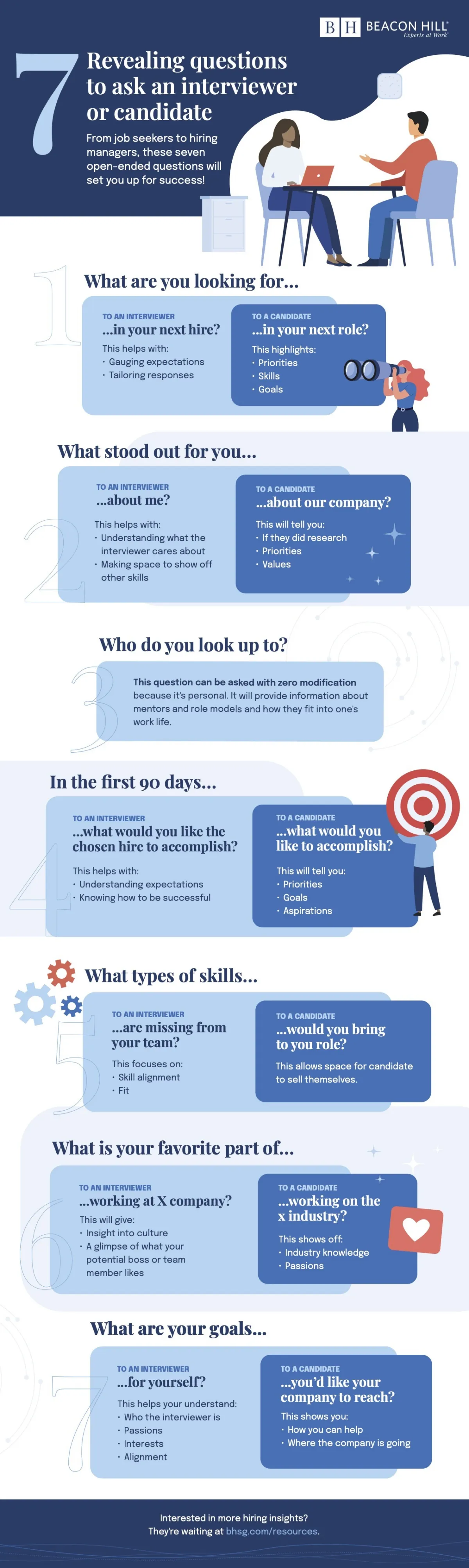
Asking open-ended questions is helpful whether you're looking for a new role or interviewing a potential candidate, but make sure to twist them correctly so you get the most out of each one you ask.
That's why we've assembled seven questions to ask in an interview and what they can reveal.
1. What are you looking for [x]
To an interviewer: [in your next hire]?
This helps gauge expectations of what will be expected of you if you earn the role and can help you personalize your responses to their needs. It also gives you a better chance to let them see what you could offer and whether you could perform the role.
To a candidate: [in your next role]?
This highlights a candidate's priorities, skills and goals so you can get a full picture of who they are and what they want.
2. What stood out [x]
To an interviewer: [about me]?
If you want to understand what the interviewer cares about and make space to promote your other skills, this is the question to ask!
To a candidate: [about our company]?
Everyone's time is wasted when a potential hire is unprepared for an interview. This question will help you determine whether they did research and tell you if their priorities and values align with the company's.
3. Who do you look up to?
To an interviewer or a candidate
This question can be asked with zero modification because it's personal. It will provide information about mentors and role models and how they fit into their work life.
4. In the first 90 days [x]
To an interviewer: [what would you like the chosen hire to accomplish]?
Like "What are you looking for [in your next hire]? this question clarifies expectations and illustrates how you can be successful.
To a candidate: [what would you like to accomplish]?
Similar to "What are you looking for [in your next role]?" this question puts priorities, goals, and aspirations front and center. It can also give you an idea of what their career progression at your company might look like!
5. What types of skills [x]
To an interviewer: [are missing from your team]?
This question shines a light on skill alignment and potential fit for a role.
To a candidate: [would you bring to the role]?
This allows space for candidates to sell themselves. It will also show you if they can walk the line between humility and confidence.
6. What is the favorite part of [x]
To an interviewer: [working at X company]?
This will give you insight into the company's culture and a glimpse of what your potential boss or team member likes. Chances are, if they enjoy those things and you will be working for them, you might get to do some of the same tasks or could find some common ground professionally.
To a candidate: [working in the x industry]?
This lets you discover a potential hire's industry knowledge and makes way for them to share their passions.
7. What are your goals [x]
To an interviewer: [for yourself]?
This will aid in your understanding of who your interviewer is by revealing what they're excited about and their interests. It will also tell you if you have similarly aligned goals.
To a candidate: [you'd like your company to reach]?
This lets you see where the company is going and how you can help them get there.
–
Want to learn more about how to answer tough interview questions, read Smart ways to answer "why do you want to work here? Hoping to hire the best? Check out It's not luck! How to recruit and retain top talent.
As always, if you have questions, Beacon Hill is here for you.
Related Resources
-
![]()
Criminal records, "ban the box," and discrimination
Everyone believes that people deserve a second chance.
-
![]()
Positive personality traits every recruiter has on their wish list
Letting your positive personality traits shine in an interview can help you make a fantastic first impression on employers during the holiday hiring season.
-
![]()
Understanding executive search in the finance function: A look at hiring for financial leaders
Read on to learn more about executive recruitment in the finance function and how a dependable staffing partner can streamline the process.